Low rider towing in Wylie, slow and low.
Slammed on coilovers, laid out on bags or sitting on hydraulics, a low car needs a tow planned around a few inches of clearance. Tell us the ride height when you call. We bring ramps or blocks, keep the climb shallow and work to keep the lip off the deck.
Low rider towing
- Rides
- Slammed, Bagged, Coilovers, Hydraulics
- Loading
- Shallow Climb on Ramps or Blocks
- Tell Us
- Your Clearance at the Lip
- Drop-Offs
- Custom Shops, Car Meets, Home
- Price
- Quoted When You Call
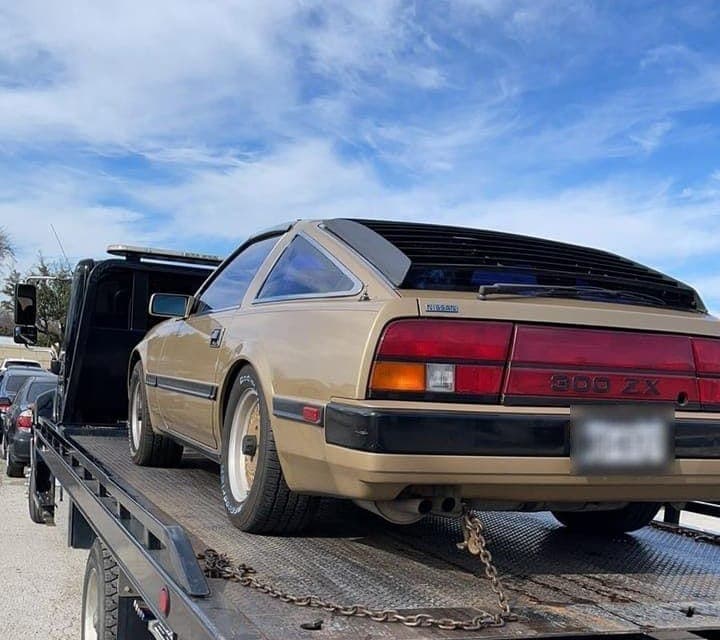
When a low car needs a lift.
Lowered cars are built that way on purpose, and their drivers know every speed bump and steep driveway in town. The tows start the way most do: a car that will not crank, a burst air line, a pump that quit, a coilover that let go on FM 544. What sets these calls apart is the few inches between the lip and the road.
A flatbed is the only way these cars ride, but the deck alone is not the answer. Before a truck is sent, we ask how low the car sits at the front lip and at its lowest point underneath, whether the suspension can still lift, and what hangs below the bumper. Those answers decide how many ramps and blocks go on the truck.
- Static drops on coilovers or springsCars that cannot come up at all get the most ramps and the slowest climb.
- Air ride with a blown bag or lineOne corner down, or a dead compressor, and the car may be resting on its bump stops.
- Lowriders on hydraulicsPumps and batteries in the trunk. Tell us whether the setup still lifts before we come.
- Headed to a car meetA show car you would rather not drive on the highway, unloaded right at the lot.
- Off to the custom shopAfter a suspension failure, straight to the builder or the shop that will fix it.
From the first question to the drop.
Most of the work on a low car happens before it moves at all.
- Measured
Clearance, in inches
Ground to the front lip, and ground to the lowest point underneath. Then we quote the tow.
- Raised
Up, if it still goes up
Working air ride or hydraulics go to full height before any loading starts.
- Ramped
Blocks under the front
Ramps or blocks lift the front tires so the lip clears the edge of the deck as the car climbs.
- Rolled off
At the shop or the meet
The ramps come out again at the far end, and the car comes down slow and even.
Bags, hydraulics and static drops.
Air ride is the easy case when it still works. Air the car up to full height before the truck arrives and leave it there until the straps are on. If a bag has blown or the compressor is dead, one corner may be sitting on its bump stop. Tell us which corner. It changes where the blocks go and how the car settles once it reaches the deck.
A lowrider on hydraulics usually carries its pumps and batteries in the trunk. If the setup still works, lift the car before loading. If those batteries have run down, charge them ahead of time if you can. Either way, we strap at the wheels, never at the lower arms or the cylinders, so nothing tugs on the setup while the car rides.
A static drop on coilovers or cut springs cannot rise at all, so the ramps and blocks do the lifting. That can mean stacking blocks, pulling the car up a little at a time with the winch and checking the gap from the side between pulls. It is slow on purpose. If the car also wears a deep front splitter or long side skirts, say so, because those often hang lower than the lip.
- Lowered daily driversSprings, coilovers and mild drops on everyday cars.
- Bagged and hydraulic carsLifted first whenever the system still works.
- Lowriders and show carsTo meets, shows, custom shops and home.
- Suspension repairs at the curbWe move the car. Your shop fixes the air or hydraulics.
Low rider towing questions.
The ones we hear most on the phone.
How low is too low for your truck?
There is no single number, because the wheelbase and the front overhang matter as much as the drop. Measure the gap under the front lip and at the lowest point in the middle, give us both, and we explain on the call how the car will go up.
My air suspension failed. Can I drive it to the shop?
Not if a corner is sitting on its bump stop. Driving like that can chew through a tire, a fender liner or an air line. Park it, leave it alone and call us. We load it as it sits and take it to your shop.
Can you drop my car off at a car meet?
Yes. Tell us the lot, when the meet opens and where the organizers want cars unloaded. Need a ride home for it afterward? Book that on the same call. Shows farther out fall under long-distance towing.
Why do you ask so much about the hydraulics?
Because a car that can lift itself loads far more easily, and a dead setup changes the plan. Tell us whether the pumps work, whether the batteries hold a charge and whether anything leaks, so the driver brings the right number of blocks.
Can you pick up a low car from a steep driveway?
Usually, but steep driveways and street gutters are where lips get caught. Tell us about the slope before we come. The driver may winch the car back to flatter ground first, then set up the ramps and load it from there.
Services callers pair with it.
Low rider towing is one of 17 light-duty services we run from Wylie. See them all.
Flatbed tow trucks
The deck itself, and why every wheel stays off the road on the way.
AWD, lowered, classicLuxury car towing
Exotic and collector cars, soft straps on the wheels and a walk-around first.
Luxury, exoticLong-distance towing
A show car headed to an event or a builder far from Wylie.
Any distanceWrecker service
A stock-height car that just needs a plain tow to the mechanic.
Cars, SUVs, pickups